
 New England’s Premier ADU Ecosystem
A Joint Housing-Education Initiative
Empowering South Shore REALTORS® to Lead the ADU Conversation
Housing Is Changing. Let's Help You Understand Your Options.
South Shore REALTORS® and The ADU Exchange have joined together to create a comprehensive housing-education resource for homeowners, families, buyers, sellers, and real estate professionals. Explore Accessory Dwelling Units, multigenerational living, aging in place, financing considerations, community resources, and responsible next steps.
Educational information only. Property eligibility and project requirements must be independently verified with the applicable municipality and qualified professionals.
Two Organizations. One Commitment to Better Housing Information.
South Shore REALTORS® brings community leadership, housing advocacy, professional expertise, and trusted regional relationships. The ADU Exchange brings specialized ADU education, technology, resource navigation, and professional tools. Together, the organizations are helping South Shore residents and real estate professionals better understand the opportunities and responsibilities associated with Accessory Dwelling Units.
South Shore REALTORS®
- The second largest local REALTOR® trade association in Massachusetts
- Serving over 3,000 members
- Representing 24 South Shore cities and towns, plus the Greater Fall River Region
- Platinum Level Commercial Services Accredited Association
- Consumer resources, advocacy, and professional education
The ADU Exchange
- A specialized ADU education Ecosystem serving New England
- Consumer education tools and resource navigation
- Professional education and property-analysis resources
- Connecting consumers, REALTORS®, municipalities, financing resources, and qualified professionals
- A strategic housing-education partner
Education First. Resources That Last.
Clear answers on a changing housing landscape
Massachusetts housing policy is evolving, and ADUs sit at the center of the conversation. This campaign exists to give South Shore residents plain-language education on what ADUs are and what questions to ask.
Guides, tools, and community pages built to endure
Downloadable guides, community resource pages, checklists, and an education-only property review tool remain available well beyond any single event or campaign moment.
One platform, two audiences
Homeowners and families get consumer education. REALTORS® and real estate professionals get training and analysis resources. Each audience gets its own clearly marked pathway.
We educate. We do not build. The campaign provides education, tools, resources, and responsible next steps, not construction or municipal approvals.
What Is an ADU?
An Accessory Dwelling Unit, commonly called an ADU, is a smaller independent dwelling located on the same lot as a principal residence. Depending on applicable law, local requirements, and property conditions, it may be detached, attached, located above a garage, or created through the conversion of existing space.
Definitions and requirements vary. Consumers must verify the controlling rules with the appropriate municipality.
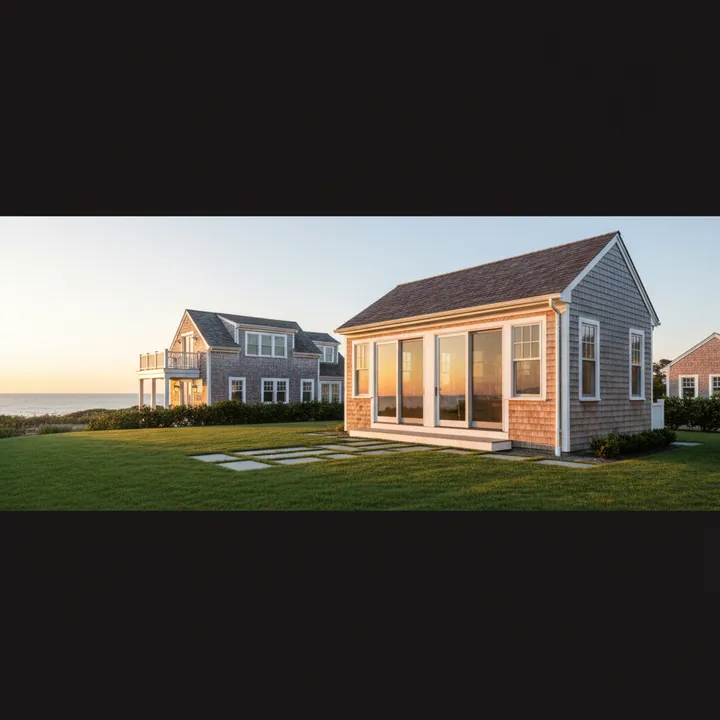 General example, not a plan, approval, or construction recommendation.
Detached ADU
Also known as: Backyard Cottage, Granny Flat, Casita
A standalone structure separate from the main house, typically built in the backyard with its own entrance and utilities.
- Maximum privacy for occupants
- Potential lawful rental use, verified locally
- Lots with adequate backyard space
- Often requires setbacks from property lines
- Height limits vary by municipality
- May require separate utility connections
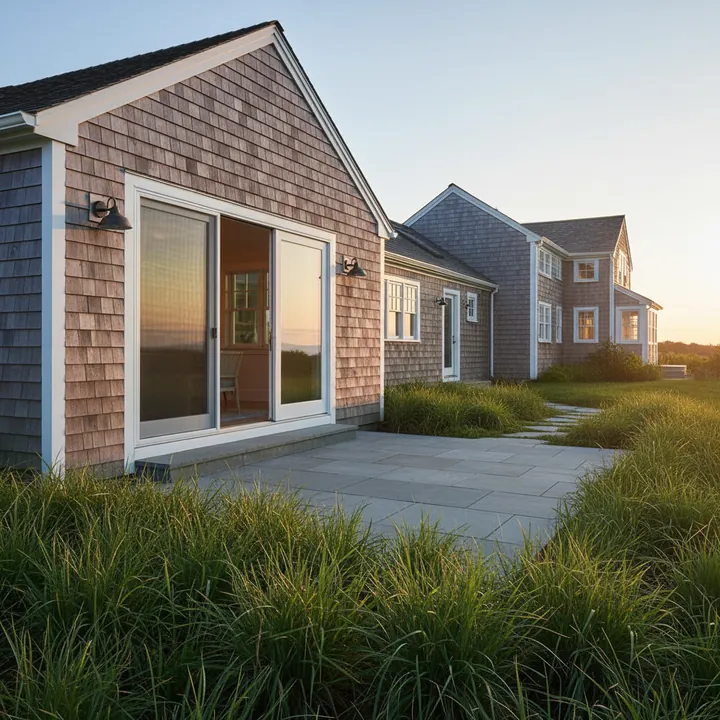 General example, not a plan, approval, or construction recommendation.
Attached ADU
Also known as: Addition, Attached Suite, Bump-out
A new living space added directly onto the existing home, sharing at least one wall with the primary residence.
- Aging family members who want proximity
- Smaller lots with limited yard space
- Shared utility efficiency
- Architectural harmony often expected
- Setback requirements still typically apply
- Fire separation requirements vary by code
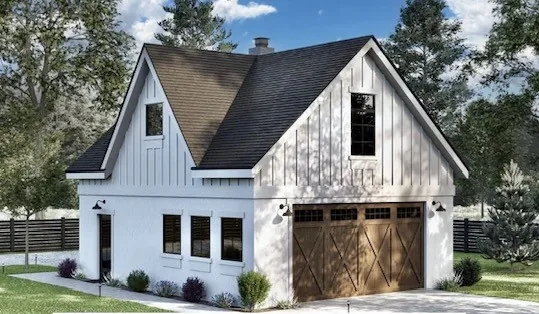 General example, not a plan, approval, or construction recommendation.
Garage Conversion
Also known as: Garottage, Converted Garage
Converting an existing garage, attached or detached, into a livable dwelling unit with bedroom, kitchen, and bath.
- Faster, often lower-cost conversion
- Existing structure reduces new construction
- Properties with parking alternatives
- Replacement parking required in some areas
- Foundation and ceiling height must meet code
- Insulation and egress upgrades often needed
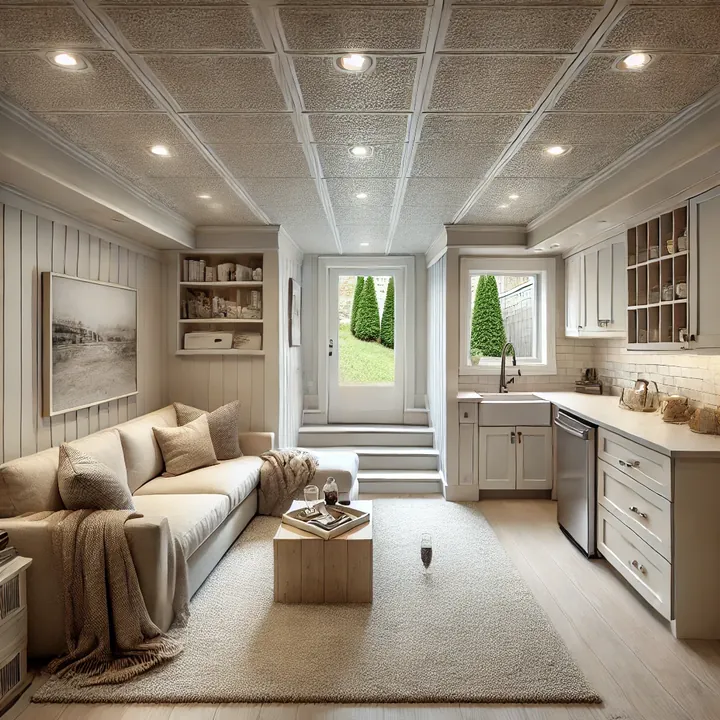 General example, not a plan, approval, or construction recommendation.
Basement Conversion
Also known as: Basement ADU, Lower-level Unit
Converting existing basement space into a separate dwelling unit, often with a separate exterior entrance.
- Homes with existing full basements
- No yard space impact
- Natural temperature regulation
- Ceiling height minimums, often 7 feet to 7 feet 6 inches
- Egress window requirements for bedrooms
- Moisture and waterproofing considerations
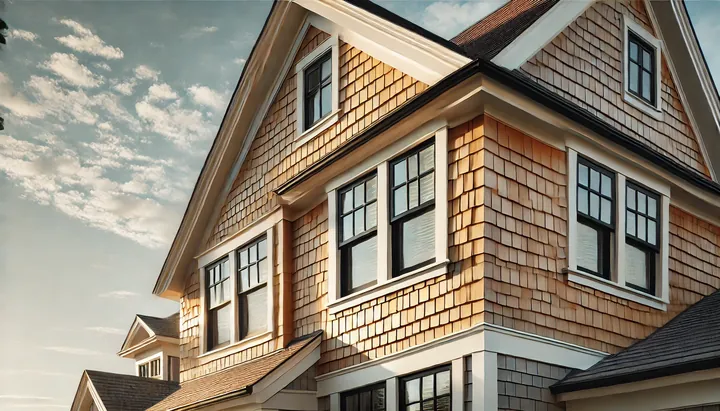 General example, not a plan, approval, or construction recommendation.
Above-Garage / Attic
Also known as: Carriage House, Over-garage Suite
A unit built above an existing or new garage, or a conversion of attic space into a separate dwelling.
- Preserving yard and ground space
- Added privacy with a separate entrance
- Properties with tall garage structures
- Height limits may restrict feasibility
- Structural support upgrades often required
- Stairway access and fire egress codes apply
 General example, not a plan, approval, or construction recommendation.
Internal ADU
Also known as: In-law Suite, Junior ADU, JADU
A conversion of existing interior space within the home’s current footprint into a separate unit.
- Lowest construction cost pathway
- No exterior changes required
- Homes with underutilized square footage
- May require a separate exterior entrance
- Kitchen requirements vary by code
- Shared or separate utilities depending on code
ADU regulations, requirements, and allowable types vary significantly by state, county, and municipality. This information is educational only and is not legal or zoning advice. Always verify requirements with your local planning and building departments before beginning any ADU project.
Every Yard Has a Story. Every Family Has a Reason.
Occupancy, rental use, dimensional requirements, and project feasibility depend on current state law, local rules, private restrictions, building requirements, utilities, and the individual property.
Independence and Family, Forty Feet Apart
Aging in place means living safely, comfortably, and independently in a familiar environment while staying connected to family and community. For some families, an ADU offers a balance no other arrangement can: a parent keeps their own front door, kitchen, and schedule, while family is steps away for Sunday dinner, for emergencies, and for the quiet comfort of proximity.
Step-free entries
Zero-step access and flush thresholds address one of the most common fall hazards in the home.
Wider doorways
Thirty-six inch doorways accommodate wheelchairs and walkers, and simply feel better for everyone.
Barrier-free bathrooms
Curbless showers, grab bars, and reinforced walls that accept future supports anywhere needed.
Single-floor living
Everything on one level, with clear sightlines, slip-resistant flooring, and enhanced lighting.
A principle worth knowing from universal design: even when accessibility features are not needed today, building them in during construction costs little, while retrofitting later is expensive and disruptive. Designing for the next twenty years is the point.
An honest note: assisted living and nursing facilities provide medical supervision, specialized memory care, and 24-hour staffing that a family ADU does not replicate. For seniors with significant medical or cognitive needs, professional care may be the appropriate choice. This page addresses housing, not medical care. Consult healthcare professionals about your family's specific situation.
Homeowners: Could Your Property Work?
You own the yard. You've wondered about it. In a few minutes, the free ADU Feasibility Check helps you see what your property might support and exactly which questions to bring to your town, before you spend a dollar with anyone.
The tool is educational and does not issue an approval, permit, legal opinion, appraisal, engineering determination, or guarantee.
Three steps, no strings
Statewide Rules and Local Requirements Work Together
Massachusetts adopted a statewide ADU framework through the Affordable Homes Act, signed August 6, 2024 (Chapter 150 of the Acts of 2024). Sections 7 and 8 of the Act amended the state Zoning Act (M.G.L. c. 40A) and took effect February 2, 2025. Under the state definition, an ADU is a self-contained housing unit with its own sleeping, cooking, and sanitary facilities on the same lot as a principal dwelling, with a separate entrance, and no larger than half the gross floor area of the principal dwelling or 900 square feet, whichever is smaller. One qualifying ADU is allowed by right in single-family zoning districts statewide, subject to the statute and its implementing regulations (760 CMR 71.00), administered by the Executive Office of Housing and Livable Communities.
State law does not make local rules irrelevant. Building codes, dimensional and setback requirements, septic and utility capacity, wetlands and flood zones, historic districts, private restrictions, and the conditions of the individual property all still shape what a specific lot can support. Municipalities may also regulate certain uses, including short-term rentals.
State framework
How statewide ADU policy interacts with local rules, with links to official Massachusetts sources.
Local requirements
Dimensional rules, permits, parking, and review processes vary by municipality and must be confirmed locally.
Property conditions
Lot characteristics, utilities, septic capacity, wetlands, flood zones, and historic status can each change the answer.
Information last reviewed: July 17, 2026 · Sources: mass.gov, Chapter 150 of the Acts of 2024 (Sections 7 and 8); 760 CMR 71.00; EOHLC ADU guidance
Seven Steps, In Order, Before Anyone Breaks Ground
- 1Define the housing goal
- 2Gather basic property information
- 3Review state and municipal resources
- 4Contact municipal departments
- 5Consult qualified professionals
- 6Compare design, cost, financing, and responsibilities
- 7Complete approvals before construction or occupancy
The Build Journey walks the path from design to keys, step by step.
Find Your Community's Official Resources
South Shore REALTORS® serves 24 South Shore communities and the Greater Fall River Region. Community pages link directly to official municipal departments, permit portals, and published ADU information, each with a public last-reviewed date.
Example: Plymouth
Official municipal links · Building department · Planning and zoning · Permit portal · Last reviewed: [PENDING]
Example: Quincy
Official municipal links · Building department · Planning and zoning · Permit portal · Last reviewed: [PENDING]
Example: Fall River
Official municipal links · Building department · Planning and zoning · Permit portal · Last reviewed: [PENDING]
Links are provided for consumer convenience. Inclusion does not represent municipal endorsement or a final interpretation of local requirements. Municipal information changes. Consumers should confirm all requirements directly with the municipality before making decisions or incurring costs.
Plain-Language Guides for Real Decisions
Deep-dive articles written for South Shore families and the professionals who serve them: the law in plain English, the septic question that decides feasibility here, ownership and protection planning, and the family situations driving the ADU conversation.
The New Rules of the Backyard
What the Massachusetts ADU law actually says, in plain English: the by-right framework, the 900 square foot rule, and what still runs through your town.
Read the guide FeasibilityTitle 5 First
On the South Shore, septic capacity decides ADU feasibility before zoning gets a vote. How Title 5 bedroom math works and what happens at time of sale.
Read the guide Paying for ItMaking the First Mortgage Work
How ADU rental income treatment and the 203(k) renovation program can change a young couple's math, and the rules that come with it.
Read the guide Family and OwnershipWhose Name Goes on the Deed?
Building for your parents? The ownership question comes before the floor plan. Four ways Massachusetts families structure it, with the tradeoffs of each.
Read the guide Family and ProtectionThe Five Year Look-Back
What MassHealth can and cannot do to an ADU investment when parents contribute toward a unit on a child's property.
Read the guide The Families This Is ForThe Launch Pad
One in three young adults lives at home. Why the childhood bedroom is failing both generations, and how an ADU changes what staying means.
Read the guide For REALTORS®The Biggest Client Conversation of the Next Decade
Three quarters of adults over 50 want to age in their homes. What the research means for the professionals guiding them.
Read the guide For REALTORS®Speaking ADU
Massachusetts needs 222,000 new homes by 2035 and ADU rights are statewide law. The language every agent will need, and why fluency wins.
Read the guideLibrary articles are educational resources only and are not legal, tax, financial, lending, zoning, or construction advice. Topics involving ownership, MassHealth, and financing carry their own disclaimers and direct readers to appropriately qualified professionals. Statistics and legal statements within articles carry their sources; verify current rules with the municipality and licensed professionals.
Guides Built to Keep, Not Skim
Workshops and Webinars
Campaign events will be announced here.
Consumer workshops, webinars, and community sessions post once dates are confirmed by both organizations. No placeholder events are ever shown as active.
Work With a REALTOR® Who Understands the Questions to Ask
A REALTOR® may help consumers organize property information, understand market context, identify issues requiring municipal or professional review, and communicate responsibly about lawful ADU features and potential.
Professional Education and Analysis Resources
ADUs are creating new questions for buyers, sellers, families, homeowners, and municipalities. The ADU Agent Arsenal provides professional education and property-analysis resources designed to help real estate professionals navigate those conversations more responsibly and consistently.
The ADU Agent Arsenal
Six courses across 7 chapters and 69 lessons: ADU Market Mastery, Property Intelligence, Valuation Concepts, Financing Awareness, Listing Strategies, and the Business Architecture capstone. Strictly educational, with clear role guidelines, safe-language frameworks, and E&O risk management woven through every course. No continuing-education credit is offered or implied.
Explore the CourseAgent Intelligence Suite
Nine professional tools including the Buyer's and Seller's ADU Analyzers, Permit Pathfinder, Agent Dashboard, Agent CRM, Financial Command Center, Property Manager, and Concept Plot Plan Generator. Client data stays on the agent's own device by design.
Explore the SuiteThe ADU Agent Arsenal course and the Agent Intelligence Suite are separate commercial offerings from The ADU Exchange and are not part of the consumer campaign's grant-funded deliverables. They are educational and professional resources only. They do not provide municipal approval, legal advice, appraisal services, zoning determinations, engineering review, architectural services, lending decisions, tax advice, construction services, guaranteed property outcomes, or continuing-education credit.
Why South Shore REALTORS® and The ADU Exchange Joined Forces
The housing landscape is evolving quickly. Consumers need reliable education, and real estate professionals need practical tools for discussing ADUs without overstating what a property can support. South Shore REALTORS® and The ADU Exchange have combined regional leadership, housing advocacy, specialized ADU knowledge, technology, and professional education to create a resource designed for the entire South Shore community.
South Shore REALTORS® and The ADU Exchange have joined together to provide consumers and real estate professionals with trusted ADU education, practical resources, innovative tools, and responsible guidance throughout the evolving housing landscape.
Let's Put the South Shore on the Housing Map.
Whether you are a homeowner exploring new possibilities, a family planning for the future, a buyer or seller evaluating property options, or a REALTOR® helping clients navigate a changing market, South Shore REALTORS® and The ADU Exchange are committed to providing trusted education, innovative tools, and responsible resources.
Because Better Housing Decisions Begin With Better Information.
New England’s Premier ADU Ecosystem